


Smash Land!
4.6775.00 Reviews
App Specs
- Version
- 660
- Updated On
- License
- Free
- Downloads
- 100,000+
- Developer
- Flow Games A.S.
- Categories
- Puzzle
- Platform
- Android
Screenshots
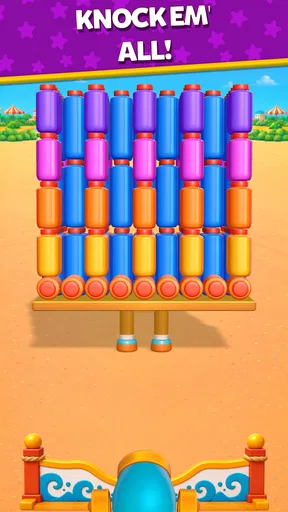
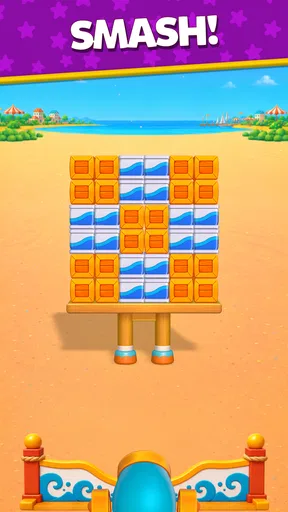
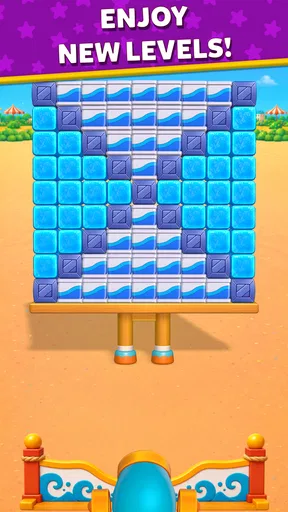
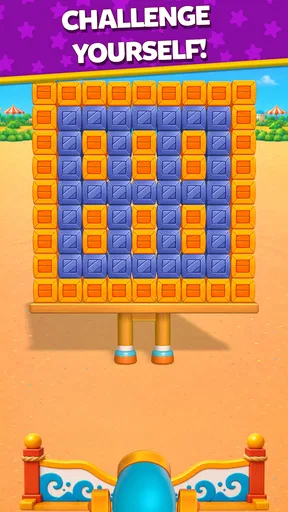
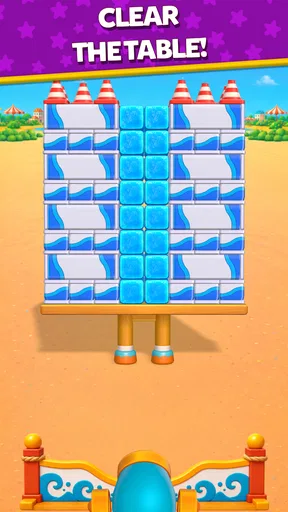
 Analysis by AppCompare
I went into Smash Land! expecting a quick puzzle game built around simple aiming, and that is exactly where it makes the strongest first impression. The basic idea is easy to understand: line up a shot, fire, and try to break through the arrangement in front of you. Its store summary captures the rhythm with “Aim, fire, and smash your way!”, but after spending time with it, I found that the appeal is less about the slogan and more about how quickly each attempt turns into a small decision-making exercise.
This is a free puzzle game from Flow Games A.S., rated for Everyone. It has reached over ten thousand installs and holds a 4.6 average from around eleven thousand ratings, which suggests that its straightforward format has found an audience. The current version is 660, and the game is listed as released on August 14, 2026. I would not treat those figures as a substitute for trying it yourself, but they do place it in the category of a small, actively noticed casual game rather than an obscure experiment.
What makes the first few minutes easy, and where players can get stuck
The opening experience is approachable because the central action needs very little explanation. You are not learning a complicated control scheme or reading a long story before playing. The important skill is visual: judge the angle, decide what to hit first, and make the shot count. That makes the game suitable for short sessions when I want something more engaging than passive scrolling but less demanding than a large strategy title.
The same simplicity can create the first point of friction. When a shot fails, the reason may not be obvious. Sometimes the problem is the angle; sometimes the chosen target does not produce the chain of destruction I expected. I found it useful to stop thinking of each attempt as “hit the largest object first” and instead look for the point that changes the whole layout. A smaller target can be the better opening if it exposes several others or redirects the action into a more useful path.
That is the first non-obvious lesson I would give a new player: do not spend every attempt chasing the most visible target. The best move is often the one that improves the next move. This turns the game from a reflex exercise into a compact planning puzzle. You can usually take a moment before firing, and using that pause is more valuable than trying to act quickly.
Another place players may hesitate is after an unsuccessful attempt. It is tempting to repeat the same shot with a tiny adjustment, especially when the previous result looked close. I had better results when I changed one thing at a time: first the starting angle, then the target, then the timing of the release. That approach makes failure informative instead of letting several guesses blur together.
How I approach a difficult board
My preferred routine is to scan the entire arrangement before touching the firing control. I look for narrow openings, surfaces that might redirect the shot, and clusters that seem to depend on one key piece. I then choose a low-risk first attempt, even if it does not appear to produce the biggest immediate smash. The goal is to learn how the board reacts while preserving a useful route for the next try.
Worth Reading Before You Choose

Baby Panda World Brings Quick Play to Modern Phones, but Its Game Library Feels Busy

ESPN’s Live Game View Makes Following Close Games Easier

QuizzLand Review: A Good Fit for Short Trivia Breaks, Not Every Player

Basketball Stars: Multiplayer Is Fast, but Can It Recover When Matches Go Wrong?

WEBTOON Turns Phone Updates Into a Better Reading Routine

Link to Windows Runs on Shared Habits, Not Social Feeds
This matters particularly in a game designed around repeated short attempts. A player who fires immediately may finish a session feeling that the result was random. A player who studies the layout for a few seconds can usually identify a clearer cause and effect. That small habit makes the experience feel fairer and reduces the frustration that can come from restarting without understanding what went wrong.
For everyday use, I see it fitting naturally into a commute, a waiting room, or a short break between tasks. I would play a few attempts while waiting for a coffee rather than begin a long game that demands uninterrupted attention. If I had only one hand free, I would still want to check the control response in that situation before relying on it, because precision games are much less comfortable when the screen is crowded or the phone is being held awkwardly.
Setup checks that prevent avoidable trouble
Because the game is free to download, the initial decision is uncomplicated, but I would still approach setup sensibly. I would install it through the normal Android or iOS store route, open it with a stable connection available, and allow the first launch to finish before switching between apps. That is not a special requirement unique to this title; it is simply the cleanest way to avoid mistaking a slow first start for a broken game.
If the game does not open correctly, my first check would be the obvious one: close it completely, reopen it, and make sure the device has enough free storage for ordinary app operation. I would also confirm that the operating system and store installation are current. These steps are deliberately unglamorous, but they solve more setup confusion than repeatedly tapping the same icon.
The game is listed as free, while its in-app purchases range from $1.99 to $99.99 per item. That makes the purchase screen worth treating carefully, especially if someone else uses the device. I would not assume that a free download means every optional element is free, and I would review the store account’s purchase controls before handing the phone to a child. The Everyone age rating makes it broadly accessible, but age suitability and spending habits are separate questions.
I also recommend starting with notifications and sound at comfortable levels rather than changing several device settings at once. If the game seems unresponsive, that helps isolate whether the issue is touch input, audio, or the app itself. A screen protector, damp fingers, or a case that slightly covers the display edge can make aiming feel inaccurate. Before blaming the game, I would clean the screen and try a few shots while holding the phone normally.
One practical setup tip is to avoid judging the controls during a rushed first launch. If I open a puzzle game while walking, carrying bags, or switching between several apps, every missed shot feels like a control problem. I get a more reliable impression by playing a short stationary session first. That establishes whether the aim feels predictable and whether the visual scale works comfortably on my particular screen.
Understanding the cost without letting it shape the session
I would also decide in advance whether I want to play entirely for free. That boundary is useful because puzzle games can make a player feel that one more attempt or optional purchase will solve a frustrating moment. In my experience, the better test is to play long enough to decide whether the core aiming and smashing loop is enjoyable on its own. If it is not satisfying without spending, paying is unlikely to fix the underlying mismatch.
On the other hand, someone who enjoys the basic loop and wants to support the developer may view optional purchases differently. The important point is to treat them as a choice, not as part of the installation process. I would read each purchase prompt carefully, especially where a quick tap could be made during a failed attempt or a moment of impatience.
Recovering a stalled session without losing the useful part
When a run goes badly, I do not immediately restart with the same plan. I first identify the last decision that mattered. Was the opening angle too direct? Did I aim for a target because it was obvious rather than useful? Did I fire before checking the route beyond the first impact? This short review gives the next attempt a purpose.
A helpful recovery workflow is to divide the board into three stages. First, find the opening contact point. Second, predict what that contact is likely to expose or redirect. Third, consider where the shot ends and whether that ending helps the remaining layout. Many failed attempts come from concentrating only on the first impact. The game becomes more manageable once I treat the entire path as one connected problem.
I also avoid changing multiple variables after a miss. If I alter the angle, target, and release position together, I cannot tell which change helped. Instead, I keep the target and adjust the angle slightly, or keep the angle and select a different target. This is a simple technique, but it gives the puzzle a more methodical feel and prevents frustration from taking over.
After several unsuccessful attempts, I take a short break rather than forcing the issue. That may sound obvious, but visual puzzles become harder when I am looking at them angrily. Returning after a few minutes often makes the useful route stand out. The game works well for this because its format supports brief sessions; there is no need to turn one difficult board into a long endurance test.
If the app closes or behaves strangely, I would use a cautious recovery order. I would relaunch it, check whether the device is under heavy load, and try again before reinstalling anything. Reinstallation should be a later step because it can remove local progress in some apps, and I would not risk that without knowing how this particular game stores progress. If the problem continues, I would record what happened, including the screen or action that preceded it, so any support request is more useful than simply saying that it “does not work.”
When the app is not the cause
It is easy to blame a puzzle game when shots feel inconsistent, but the phone can be the real source of trouble. A crowded background process may make touch response feel delayed. A low-quality screen protector can interfere with small movements. Bright reflections can hide the exact edge or gap I am trying to use. Before deciding that the game is unfair, I would test it under normal lighting, with the screen clean, and with other demanding apps closed.
Network conditions can also confuse the diagnosis during launch or account-related activity. If the game opens slowly, I would try a reliable connection and then repeat the launch later rather than repeatedly tapping buttons. If other apps are also failing to connect, the problem is probably broader than this title. Restarting the device is a reasonable general check, but I would avoid changing system settings at random because that makes the original issue harder to isolate.
Touch technique matters more than I expected. I get more consistent results when I hold the phone steady and use the same finger position for comparable attempts. Rapid swipes from different parts of the screen make it harder to distinguish a genuine puzzle mistake from an accidental input. This is especially relevant for players who normally use a larger screen or a physical controller with other games; the direct touch feel here may require a small adjustment.
There is also a psychological source of “technical” frustration: expectation. If I assume every level should be solved immediately, a deliberate puzzle can feel broken. I now treat the first failed attempt as reconnaissance. That mindset does not excuse unclear design, but it helps separate a board that needs thought from a control that is genuinely misbehaving.
Who will enjoy it, and who should choose another puzzle game
I would recommend Smash Land! to someone who likes compact physics-flavored puzzles, visual problem solving, and the satisfaction of improving a shot after a mistake. It is particularly suitable for players who want a game that can be picked up for a few minutes without committing to a campaign, a large map, or a complicated upgrade system. The Everyone rating also makes it a reasonable candidate for a shared family device, provided an adult handles purchase settings and checks that the play style suits the child.
I would be less enthusiastic for someone seeking a deep narrative, extensive character development, or a highly competitive multiplayer experience. This is a focused puzzle game, not a replacement for a full strategy title. Players who prefer word puzzles, number grids, or calm logic problems may also find the aiming-and-smashing format too dependent on spatial judgment. In those cases, a traditional Sudoku, match-three, or turn-based puzzle may be a better fit because the challenge is easier to pause and analyze without the physical trajectory element.
Compared with a typical match-three game, this title asks me to plan a route rather than search for a matching group. Compared with a pure physics sandbox, it gives the action a clearer puzzle purpose instead of encouraging unlimited experimentation. That middle ground is its main identity. It is more tactile than a grid puzzle but more structured than simply knocking objects around.
The trade-off is that the same focused loop may become repetitive for players who need constant novelty. I would not install it expecting a broad collection of unrelated modes. I would install it because I enjoy refining an aim, spotting a better opening, and watching a compact plan work. That distinction is important: the game’s value comes from the quality of its central action, not from pretending to be an all-purpose mobile entertainment package.
My practical verdict after using it
My overall impression is positive, with a clear condition: you need to enjoy learning from failed shots. The free entry point makes it easy to test, and the 4.6 average from roughly eleven thousand ratings indicates that many players respond well to its accessible puzzle format. Flow Games A.S. has kept the concept direct enough for casual play, while the aiming decisions give it more substance than a purely automatic smashing game.
I would begin with a short, no-purchase session and use the first few boards to learn how the layouts react. I would keep the phone steady, inspect the whole route before firing, and change only one decision after a miss. Those habits make the experience less random and help reveal whether the game’s particular style suits me.
The current version, 660, is the one I would look for when installing, and I would keep ordinary app troubleshooting in mind if the first launch is slow or touch input feels unusual. A clean screen, a stable connection during setup, and a little free storage are sensible checks before drawing conclusions. If the game still feels unresponsive after those basics, then it may simply not be the right match for the device or for the way I prefer to play.
My recommendation is to try it if you want a free, short-session puzzle built around careful aiming rather than endless matching. I would skip it if I wanted a story-heavy adventure, a large strategic system, or a game that never asks me to repeat an attempt. For the right player, the pleasure is in finding the shot that changes everything; for everyone else, a more traditional puzzle alternative may offer a calmer and more varied experience.
Pros
- Simple controls make it easy to start playing immediately.
- Short matches work well for quick gaming sessions.
- Bright visuals give the game a cheerful
- accessible style.
- Unlockable content provides extra goals beyond the opening levels.
- Physics-based attacks make each encounter feel dynamic and satisfying.
Cons
- Progress can become repetitive after extended play.
- Some stages rely heavily on trial and error.
- The game may offer limited depth for experienced players.
- Difficulty spikes can feel abrupt in later sections.
- Requires enough storage and may perform poorly on older devices.
FAQs for Smash Land!
What is Smash Land!?
Smash Land! is a fast-paced arcade game centered on smashing objects, completing short challenges, and improving your score. Its simple controls make it easy to start playing, while progressively harder stages and objectives add variety. The game is designed for quick sessions, making it suitable for casual players who want an entertaining experience without a complicated learning curve.
Is Smash Land! free to download and play?
Smash Land! can generally be downloaded for free, although the exact availability and monetization options may vary between Android and iOS. Free games of this type may include advertisements, optional in-app purchases, or both. Before downloading, it is worth checking the store listing for current pricing, supported devices, purchase details, and whether extra content or advantages can be obtained through payments.
Does Smash Land! require an internet connection?
The basic gameplay in Smash Land! may work without a continuous internet connection, which is convenient for playing during travel or when mobile data is unavailable. However, certain features can depend on connectivity, including advertisements, online rankings, cloud-related services, updates, or purchases. For the most reliable experience, launch the game once while connected and review its current requirements on your device.
Is Smash Land! suitable for children?
Smash Land! is generally easy to understand because its gameplay focuses on straightforward actions rather than complex controls or detailed instructions. Nevertheless, parents should check the age rating, advertising content, and in-app purchase settings before allowing children to play. If the game includes competitive scoring or repeated attempts, it may also encourage longer sessions, so parental screen-time controls can be useful.
What should I check before installing Smash Land!?
Before installing Smash Land!, confirm that your Android or iOS device meets the required operating-system version and has enough free storage for the download and future updates. Also review permissions, privacy information, advertisements, and in-app purchases. Checking recent user reviews is helpful as well, since compatibility, performance, battery consumption, and availability can differ depending on the device model and software version.


